Echoes After the Quarter Ends
Dr. Andy reflects on a lifetime of teaching college students

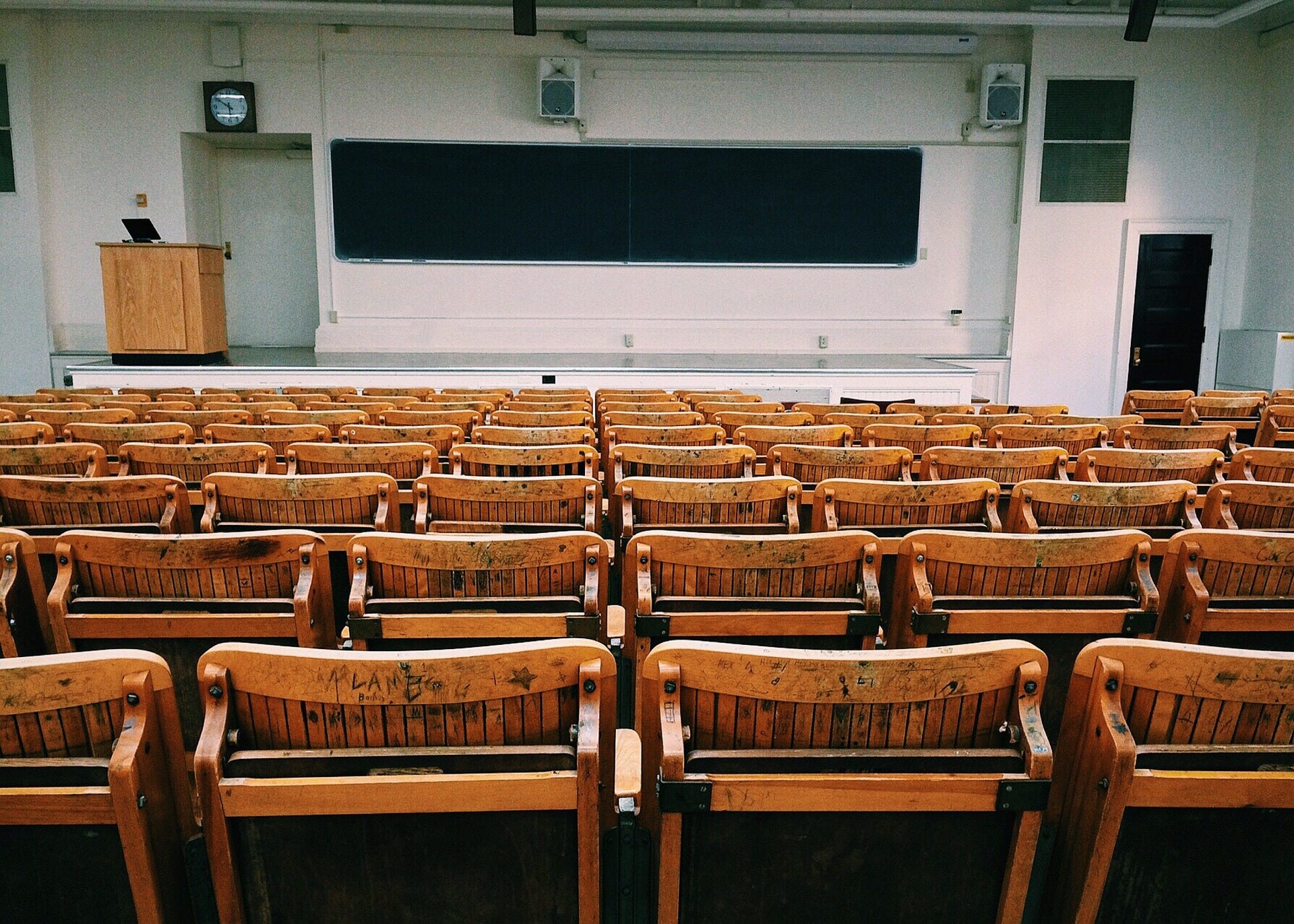
For thirty-six years, I have walked into UC Davis classrooms once carrying books, notes, and attendance sheets; now carrying less, and trusting discussion to carry the hour. I have taught poetry, essays, multimodal autobiography, writing across media, and the occasional class that threatened to become a graduate seminar because someone in the back row asked a smart question about a line in Yeats or Baldwin or Didion.
Like many faculty, I once imagined education as mostly forward-looking. Students arrived. We spent ten weeks together. They wrote papers, revised them, stared at me stone-faced when I made jokes, tolerated my enthusiasms, and eventually disappeared into careers, marriages, graduate schools, parenthood, and lives I could only partially imagine. New students replaced them the next quarter. The years began stacking like the boxes full of poetry books in my garage.
When I first began teaching, I did not understand that some classrooms continue echoing long after the quarter ends.
The echoes arrive unpredictably.
Some echoes arrive through email or Facebook Messenger. Sometimes I will encounter a familiar face at the Farmers Market or on campus on Picnic Day. If I am lucky, I encounter a former student standing unexpectedly in my office doorway twenty years later, smiling in a way that briefly collapses time.
About two decades after taking my T. S. Eliot class, Sarah Oliver Gordus, the student who trained me as a new public affairs host at KDVS in 2000, knocked on my office’s open door. I could still remember her from our Young Hall classroom years earlier: long red hair, intelligence mixed with seriousness, and the kind of attentiveness that makes discussions feel alive rather than merely procedural. Yet suddenly there she was not as a student frozen in memory, but as a fully formed adult carrying two additional decades of experience, disappointment, accomplishment, humor, and history.
Students often remember versions of us that no longer exist, gone with the once black pigment of my beard. Somewhere in Sarah’s memory, I am still teaching Eliot to students carrying spiral notebooks instead of laptops, still standing at the front of a class before distracting smartphones adorned each desk. Meanwhile, she herself had continued making friends and discoveries through twenty years of life invisible to me. When such former students return, even briefly, one experiences the uncanny sensation of seeing both the past and present layered together like translucent pages in a Norton anthology.
Another student from that same Eliot class, Valerie Cullen Shepard, eventually headed to University of California, Los Angeles to pursue Milton studies and earn a PhD. At some point, I realized that my own Milton books had found their rightful future owner in Valerie. Books migrate toward the people who still hunger for them, and I had never met anyone so hungry for Milton. A professor’s shelves are less a permanent library than a way station. I still like imagining those volumes now being opened beneath different lamps, annotated in another hand. And now, photo holiday cards of Valerie and her family sit near those same bookshelves.
Some echoes take forms no syllabus could anticipate.
Years after taking a Writing across Media course I taught for Film and Digital Media students, a former student named Kevin contacted me with a request so unexpected I reread the message twice to make sure I understood. He wanted me to become a minister and officiate his wedding to Natalie, who years earlier had babysat for our family. Teaching already blurs categories. Students become colleagues, collaborators, fellow citizens, neighbors, and even friends.
I had spent years teaching students to find meaning in other people’s narratives; it had not occurred to me that one day I might be standing inside one of theirs, holding a microphone and trying not to cry.
We are present for many undergraduate transitions. We see students during heartbreaks, illnesses, intellectual awakenings, family crises, exhausted mornings, and artistic breakthroughs they often conceal from one another. Yet even faculty who get to know their students well rarely see the longer arc. If not for Facebook or familiar names in the UC Davis alumni magazine (where I am also an alumnus), I would rarely witness who they become afterward. When former students return years later, they bring fragments of that largely invisible future back with them.
I think often now about the hidden continuity beneath a teaching career. Outsiders sometimes imagine that professors primarily teach subjects. Milton. Eliot. Virginia Woolf. Composition. Media studies. Poetry. Yet after enough years, teaching stops feeling like the delivery of information and starts feeling like short-term participation in hundreds of human stories that occasionally circle back to my attention. You begin remembering faces attached to particular moments of intellectual courage: the student who risked sharing a difficult image in a poem, the student who stayed after class to keep talking, or the student who started attending Poetry Night and then returned as the author of award-winning novels.
The richest rewards of teaching can arrive as applause at the end of the quarter, but they also can emerge decades later in the form of a knock on the door, an invitation, an email, a remembered classroom, a student who still carries part of the conversation forward long after both of you have changed.
These echoes that still ring for me like half-remembered lines of poetry have become some of the great sustaining surprises of my life at UC Davis.
For more Pub Quiz fun, please subscribe via Patreon at https://www.patreon.com/c/yourquizmaster.
Best,
Dr. Andy
Recent trivia for you:
Youth Culture. What is Labubu: A Chinese furry monster, a K-Pop singer’s nickname, or a Japanese virtual pet?
Hair Accessories. What common hair accessory shares its name with a small edible squid?
Science. Commonly found in granite, what M mineral splits into thin elastic sheets because of its perfect basal cleavage?
This reflection of myriad memories, accumulated nodes of knowledge and caring, and brief stories of how educators and students participate in one another's growth as contributing human beings is the best and most moving account of its kind I've ever read. It goes a long way toward characterizing how, over time, light finds a home in our eyes.
Dear vibrant threads of life, of connecting and reflecting light